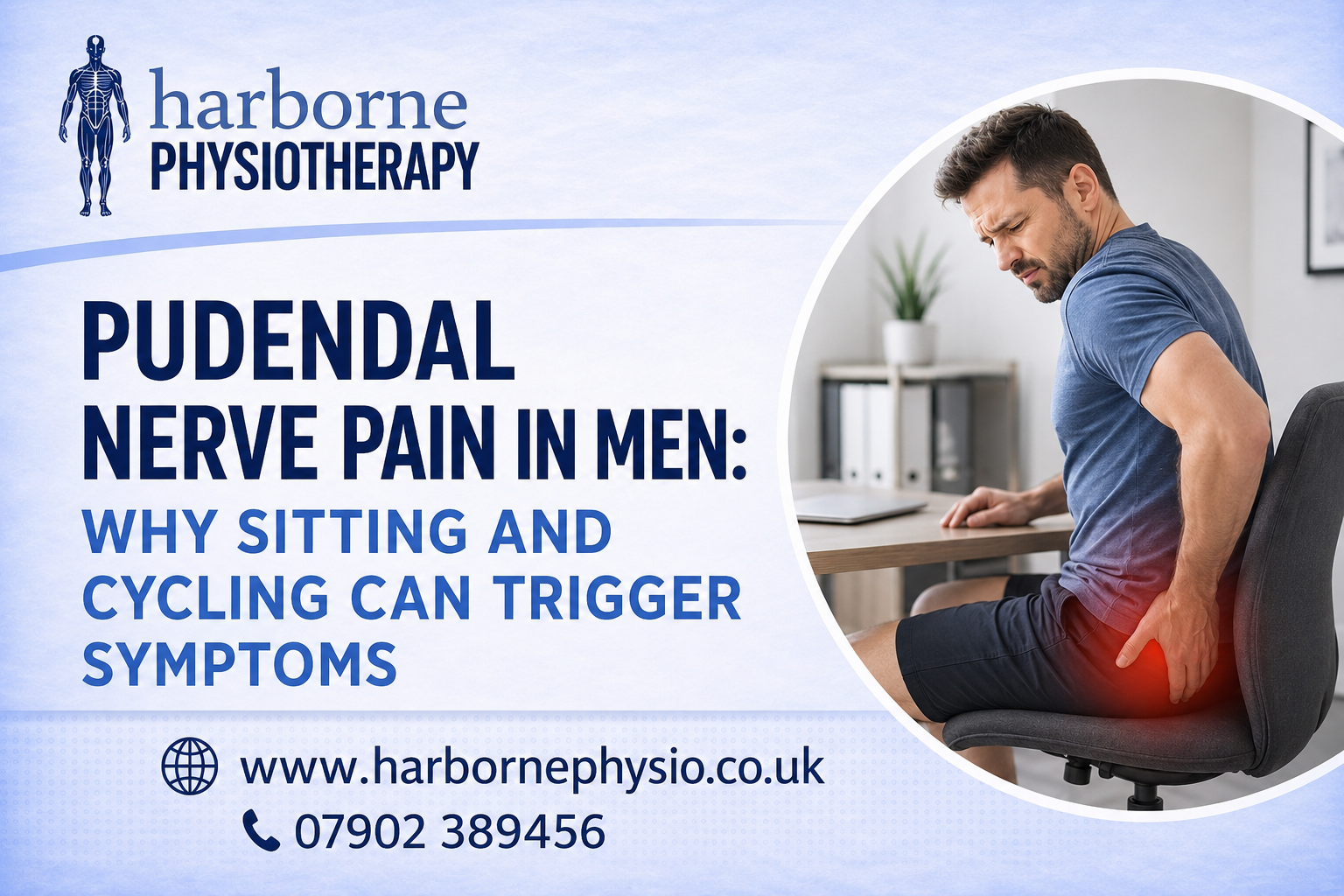
A Birmingham Men’s Health Physiotherapy Guide
Pudendal nerve pain can be one of the most confusing and distressing forms of male pelvic pain.
Many men describe pain that is difficult to explain, difficult to locate and difficult to talk about. It may feel like burning, pressure, tingling, numbness, aching or sharp pain around the perineum, penis, testicles, rectum, anus or deep pelvis. For some men, the pain is worse when sitting. For others, it flares after cycling, gym training, driving, stress, bowel movements or ejaculation.
Understandably, many men worry that something serious has been missed. They may have already seen their GP, urologist, colorectal specialist or pain consultant. They may have had urine tests, scans, prostate checks or antibiotics. Often, the results are normal, but the symptoms continue.
At Birmingham Men’s Health Physiotherapy, we regularly see men with this type of presentation. The good news is that pudendal nerve irritation and pelvic floor-related nerve sensitivity can often improve with the right assessment, explanation and treatment plan.
What is the pudendal nerve?
The pudendal nerve is one of the main nerves of the pelvis. It travels from the lower spine through the pelvis and supplies sensation and function to areas including the penis, scrotum, perineum and anus.
Because of where it travels, the pudendal nerve can become sensitive or irritated by pressure, muscle tension, inflammation, repeated loading, cycling, prolonged sitting or pelvic floor overactivity.
When this happens, men may experience symptoms in very intimate areas of the body. This can feel alarming, embarrassing and isolating, but it is something specialist men’s health physiotherapists assess and treat regularly.
What does pudendal nerve pain feel like?
Pudendal nerve irritation can feel different from person to person. Some men describe a burning or raw sensation. Others describe pressure, tingling, pins and needles, numbness or a feeling of sitting on a golf ball.
Symptoms may include:
• Pain or burning in the perineum
• Penile pain or altered sensation
• Testicular or scrotal discomfort
• Rectal or anal pain
• Coccyx or deep pelvic ache
• Pain that worsens with sitting
• Relief when standing or lying down
• Pain after cycling
• Pain after ejaculation
• Urinary urgency or frequency
• A sensation of tightness or pressure in the pelvic floor
Some men also report that symptoms are worse at the end of the day, after long car journeys, after a stressful workday or after sitting at a desk for several hours.
Is pudendal nerve pain the same as pudendal neuralgia?
Not always.
This is an important point. Many men search online and quickly come across the term “pudendal neuralgia”. This can be frightening because online information is often very severe, very medicalised and not always balanced.
Some men do have pudendal neuralgia, where the pudendal nerve is significantly irritated or sensitised. However, many men have symptoms that involve the pudendal nerve without having a fixed nerve entrapment.
In other words, the nerve may be sensitive, but that does not necessarily mean it is trapped or permanently damaged.
This distinction matters because many men improve when the surrounding muscles, joints, pressure points, movement patterns and nervous system sensitivity are addressed.
How can the pelvic floor affect the pudendal nerve?
The male pelvic floor muscles sit close to the pudendal nerve. These muscles help with bladder control, bowel control, erections, ejaculation and pelvic support.
When the pelvic floor becomes overactive, tense or protective, it can increase pressure and sensitivity around the nerve. This can lead to pain, burning, tingling, urinary symptoms or sexual symptoms.
This is one reason why men with pudendal nerve symptoms often also describe pelvic floor tightness. They may feel that they cannot fully relax. They may clench without realising it. They may hold tension in the pelvis during stress, exercise, sitting or concentration.
In these cases, treatment is usually not about strengthening the pelvic floor. It is often about helping the pelvic floor relax, improving movement, calming the nervous system and reducing pressure on sensitive tissues.
Why does sitting make symptoms worse?
Sitting increases pressure through the perineum, sit bones, coccyx and deep pelvic floor. If the pudendal nerve or surrounding tissues are already sensitive, sitting can become a major trigger.
This is why men may notice symptoms during:
• Desk work
• Long car journeys
• Train journeys
• Flights
• Sitting on hard chairs
• Cycling
• Sitting after gym training
• Sitting during periods of stress
Some men feel better when they stand up, walk around or lie down. Others notice that sitting on a toilet seat is more comfortable because it reduces direct pressure on the perineum.
This pattern can be very characteristic of pudendal nerve irritation or pelvic floor-related sitting pain.
Why can cycling trigger pudendal nerve symptoms?
Cycling places direct pressure through the saddle area. For some men, especially those doing longer rides, high mileage, hard saddles or aggressive riding positions, this can irritate the perineum and pudendal nerve.
Cycling-related symptoms may include genital numbness, penile tingling, testicular discomfort, pelvic ache, erectile changes or pain after riding.
This does not always mean cycling has to be stopped forever, but during a flare-up it may need to be modified. Saddle type, bike fit, riding volume, recovery time and pelvic floor tension all need to be considered.
A common mistake is to keep pushing through symptoms because fitness is otherwise good. Unfortunately, nerves do not always respond well to repeated compression, especially when the pelvic floor is already tense or the system is sensitised.
Can stress make pudendal nerve symptoms worse?
Yes, stress can be a powerful amplifier of pelvic pain.
This does not mean the pain is imagined. It means the nervous system is involved. When the body is under stress, muscles often become more guarded, breathing becomes shallower, sleep may worsen and pain sensitivity can increase.
Many men with pelvic pain are high-functioning, busy and used to pushing through. They may not feel emotionally stressed, but their body may still be holding tension.
The pelvis is one area where this tension can show up.
What can help pudendal nerve pain?
The best treatment depends on the individual, which is why assessment matters. However, common treatment principles include reducing pressure, improving pelvic floor relaxation, restoring movement and gradually rebuilding confidence.
Helpful strategies may include:
• Taking regular breaks from sitting
• Using a pressure-relieving cushion
• Reducing cycling during a flare-up
• Avoiding aggressive stretching or heavy lower-body loading early on
• Pelvic floor relaxation exercises
• Diaphragmatic breathing
• Hip and lower back mobility work
• Bowel management if constipation or straining is present
• Gradual return to exercise
• Manual therapy where appropriate
• Education to reduce fear and improve symptom understanding
For many men, the first step is simply understanding that the pain can be real, treatable and not necessarily a sign of permanent damage.
What should you avoid?
When symptoms are distressing, it is natural to try everything at once. However, doing too much can sometimes keep the system irritated.
It may be helpful to avoid:
• Long periods of uninterrupted sitting
• Cycling through numbness or pain
• Heavy squats, deadlifts or intense core work during a flare
• Repeated pelvic floor strengthening if the pelvic floor is already tight
• Aggressive stretching into pain
• Constant symptom checking
• Searching online for worst-case scenarios
• Pushing through severe pain to “test” the area
The aim is not to become fearful of movement. The aim is to stop repeatedly irritating the system while gradually building tolerance again.
How can Birmingham Men’s Health Physiotherapy help?
At Birmingham Men’s Health Physiotherapy, we take a detailed and practical approach to male pelvic pain.
Assessment may include a discussion of your symptoms, sitting tolerance, cycling or exercise history, bladder and bowel function, sexual symptoms, stress levels, previous investigations and what makes symptoms better or worse.
We may also assess the lower back, hips, abdomen, pelvic floor and movement patterns. Where appropriate, external and internal pelvic floor assessment can be discussed, but this is always optional and only carried out with full consent.
Treatment may include:
• A clear explanation of what may be driving your symptoms
• Pelvic floor relaxation and down-training
• Manual therapy to relevant muscles and tissues
• Advice on sitting, cushions, cycling and exercise
• Nerve calming strategies
• A graded return to normal activity
• A home programme tailored to your symptoms
• Support with bladder, bowel or sexual symptoms where relevant
The goal is not just to reduce pain. The goal is to help you understand your body again, reduce fear and return to normal life with more confidence.
When should you seek medical advice?
You should seek urgent medical advice if you develop new bladder or bowel control problems, numbness around the saddle area, fever, unexplained weight loss, blood in the urine or stool, severe testicular pain, or rapidly worsening neurological symptoms.
However, if your investigations have been reassuring and you continue to have pelvic, perineal, penile, testicular or rectal pain that is worse with sitting or cycling, specialist men’s health physiotherapy may be very appropriate.
Final thoughts
Pudendal nerve pain can feel frightening, but it is not uncommon. Many men with these symptoms feel isolated because the pain is in an intimate area and can be difficult to discuss.
You are not alone, and you do not have to simply put up with it.
With the right assessment, education and treatment plan, many men can reduce symptoms, improve sitting tolerance, return to exercise and feel more confident again.
If you are struggling with pelvic pain, sitting pain, cycling-related symptoms or suspected pudendal nerve irritation, Birmingham Men’s Health Physiotherapy can help.