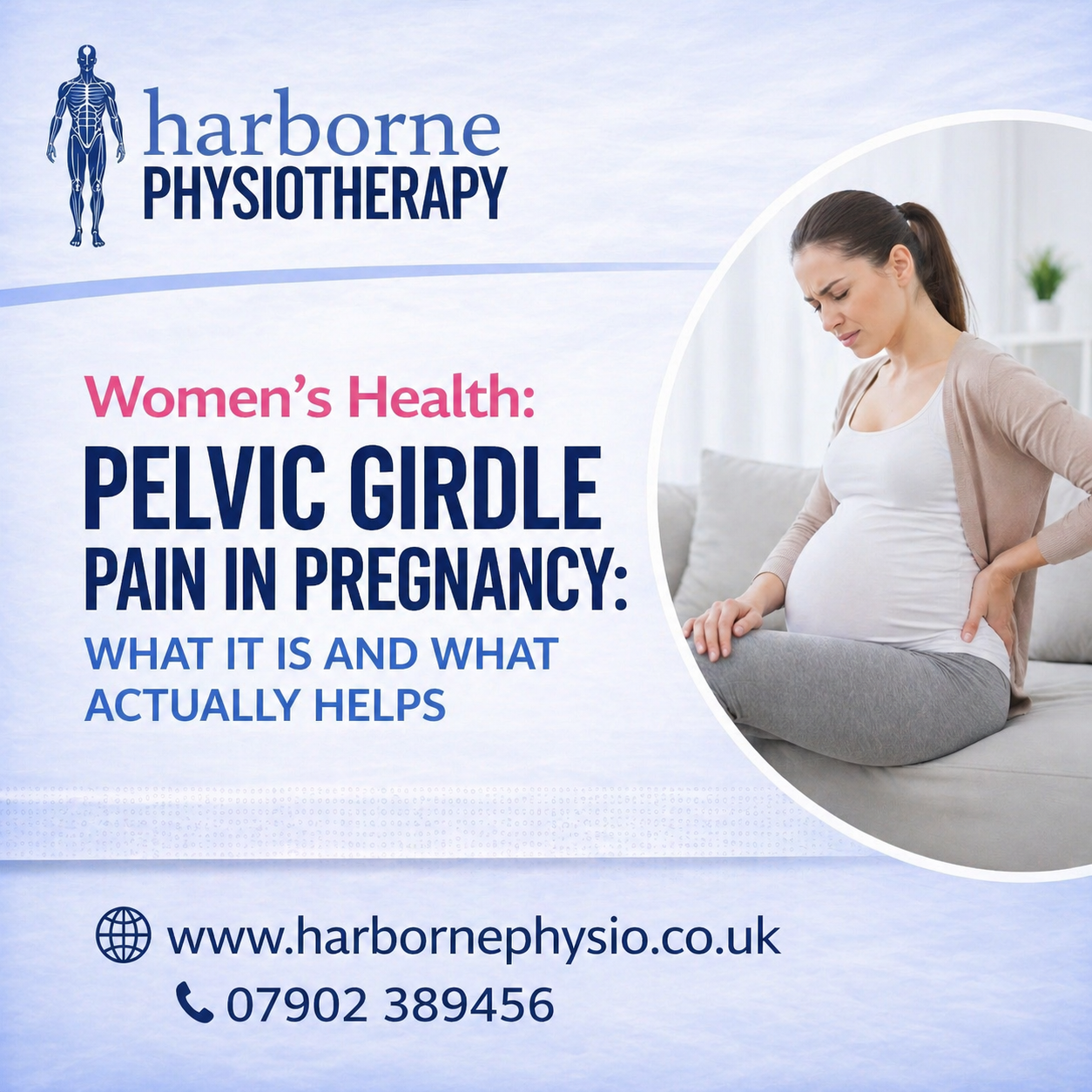
Pelvic girdle pain (PGP) is one of the most common issues we see in pregnant patients at Harborne Physiotherapy in Birmingham.
Many women describe it as:
“My hips feel unstable.”
“It hurts to turn in bed.”
“Getting in and out of the car is painful.”
“I can’t walk for long without discomfort.”
If that sounds familiar, you’re not alone.
???? Pelvic girdle pain is very common during pregnancy — but it is treatable.
What Is Pelvic Girdle Pain?
Pelvic girdle pain refers to discomfort around the pelvis, often affecting:
• the front (pubic bone)
• the back (sacroiliac joints)
• hips and groin
It can range from mild discomfort to more significant pain that affects daily activities.
Why Does It Happen During Pregnancy?
There are a few key reasons:
1. Hormonal Changes
During pregnancy, your body produces hormones that allow the pelvis to become more flexible for childbirth.
While this is normal, it can also lead to:
• reduced stability
• increased strain on joints
2. Changes in Load and Posture
As your baby grows, your body adapts:
• weight shifts forward
• posture changes
• muscles work differently
This can place extra stress on the pelvis.
3. Muscle Imbalance and Control
If the muscles that support your pelvis aren’t working optimally, the joints can become more sensitive and painful.
Common Symptoms
Pelvic girdle pain can feel like:
• pain when walking
• discomfort turning in bed
• difficulty standing on one leg (e.g. getting dressed)
• pain climbing stairs
• clicking or grinding sensations in the pelvis
What Actually Helps?
This is the most important part.
???? Rest alone is not usually the answer.
Instead, effective management often includes:
✔ Targeted Physiotherapy
A specialist assessment can help identify:
• movement patterns
• muscle imbalances
• positions that aggravate symptoms
Treatment may include:
• gentle exercises
• movement advice
• hands-on treatment
✔ Practical Daily Modifications
Small changes can make a big difference:
• keeping legs together when getting in/out of the car
• avoiding standing on one leg
• pacing activity levels
✔ Supportive Exercises
These focus on improving:
• pelvic stability
• muscle coordination
• overall movement confidence
✔ Education and Reassurance
Understanding what’s happening reduces fear and helps you stay active safely.
When Should You Seek Help?
You should consider seeing a physiotherapist if:
• pain is affecting walking or daily activities
• symptoms are getting worse
• you feel unstable
• you’re unsure what movements are safe
???? Early support often leads to much better outcomes.
Pregnancy Physiotherapy in Birmingham
At Harborne Physiotherapy, we support women through pregnancy with:
• pelvic pain management
• movement guidance
• safe exercise advice
If you’re struggling with pelvic girdle pain, we can help you feel more comfortable and confident during your pregnancy.
Learn more or book an appointment:
???? www.harbornephysio.co.uk
???? 0121 270 9480